About sixteen years ago, I met him for the first time. My trainwreck sibling brought home this adorable puppy he had no business adopting because he had not one thing in his life that wasn’t a mess. I was furious at my sibling – he didn’t even take care of himself, how could he drag
Read More
November 27, 2009
Reminder: I’m hosting the Carnival of Personal Finance this week, be sure to submit your best articles by Sunday!
Of course, you can’t cook every meal when you’re vacationing in Hawaii for the first time ever! We had some very nice meals out and the prices reinforced our decision to be frugal at least half the time.
Giovanni’s Shrimp Truck on the North Shore: $13 per plate of shrimp scampi, $1 drink
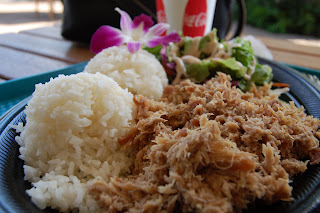
Dole Plantation: Plate lunch ($9) and Pineapple Whip dessert ($4):
Happy Hour at Kona Brewing Co.: 4 beers, 1 6-oz. sampler beer for me, 3 appetizers ($33 after tip; party of three)
Dinner at Cafe Sistina: $41 per person, included 4 shared appetizers and 2 bottles of wine; party of 9
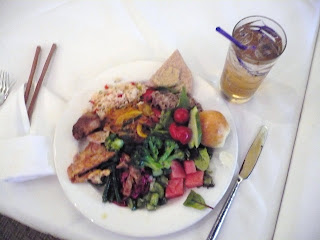
Buffet lunch at Indigo in Honolulu: $25 per person; party of 7 [You might not be able to tell, but there are about 15 different items on that plate. I was stuffed.]
We also had a mindblowing dinner at Lucy’s but I forgot my memory card at home. *heartbroken* We were treated to that meal by our local friends, and the entrees were around $25 each. The ahi tower was beyond fresh, the braised lamb just feel off the bone, and the coconut cranberry rice was amazingly moist and flavorful.
The costs were shared for a number of meals – we took turns treating each other so that the spending was relatively even across the board. Still, you can see how quickly you could spend hundreds just on eating! Luckily, that’s what a vacation is all about. 😉
November 25, 2009
Thanks to our generous living arrangements, my travel companions and I economized on the food budget by taking advantage of the local Safeway two miles down the road, and the kitchen stocked with cooking supplies.
We made more than one grocery run but the first $250 worth of groceries yielded three days’ meals for three to five people.
Sunday dinner
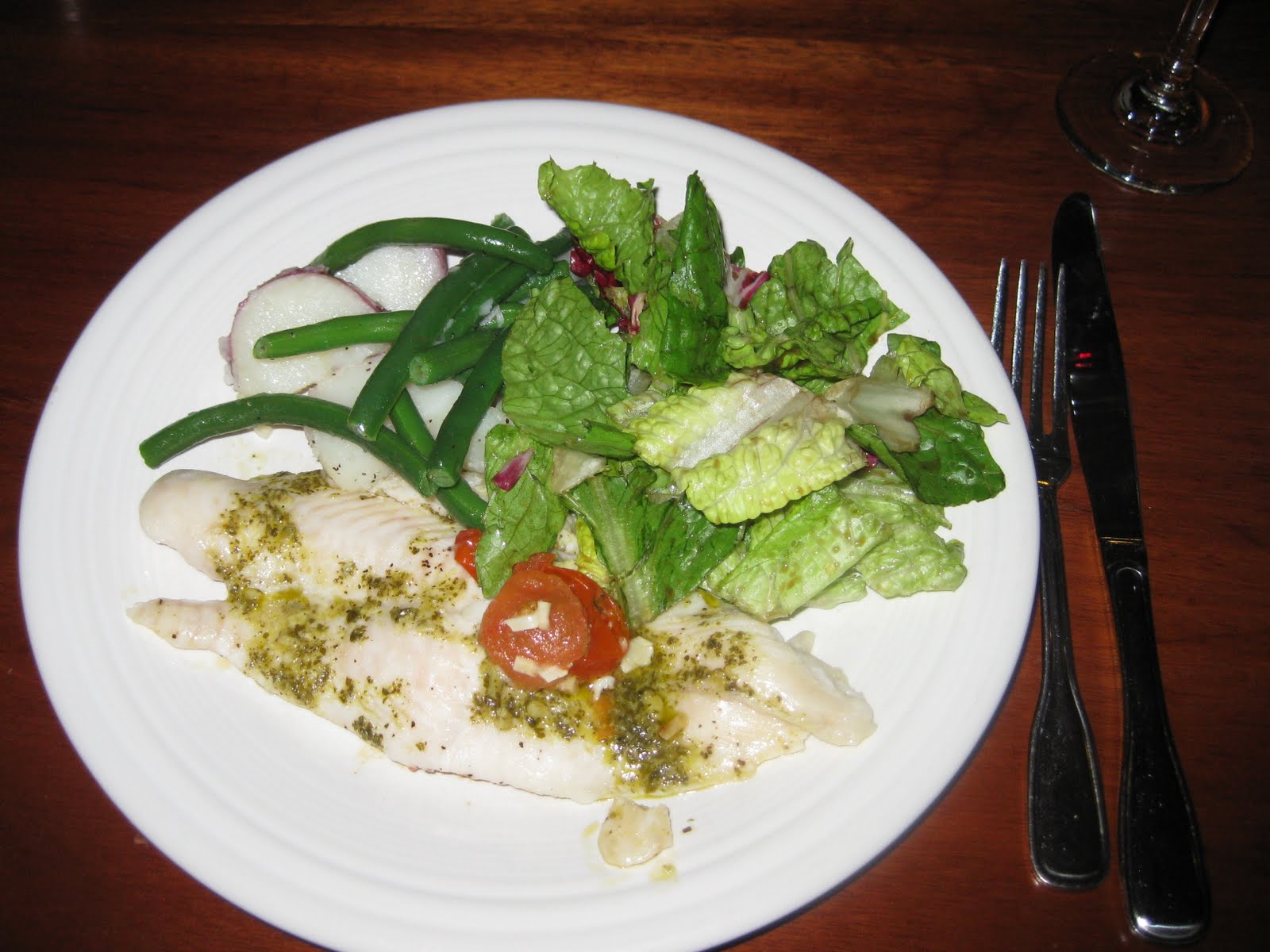
I cooked dinner for five on Sunday night: green salad dressed with a balsamic spritzer, green beans and red potatoes, baked basa (fish) with roasted tomatoes and pesto. The leftover fish made excellent fish sandwiches the next day with a dab of mayo, a couple slices of cheddar and crispy lettuce.
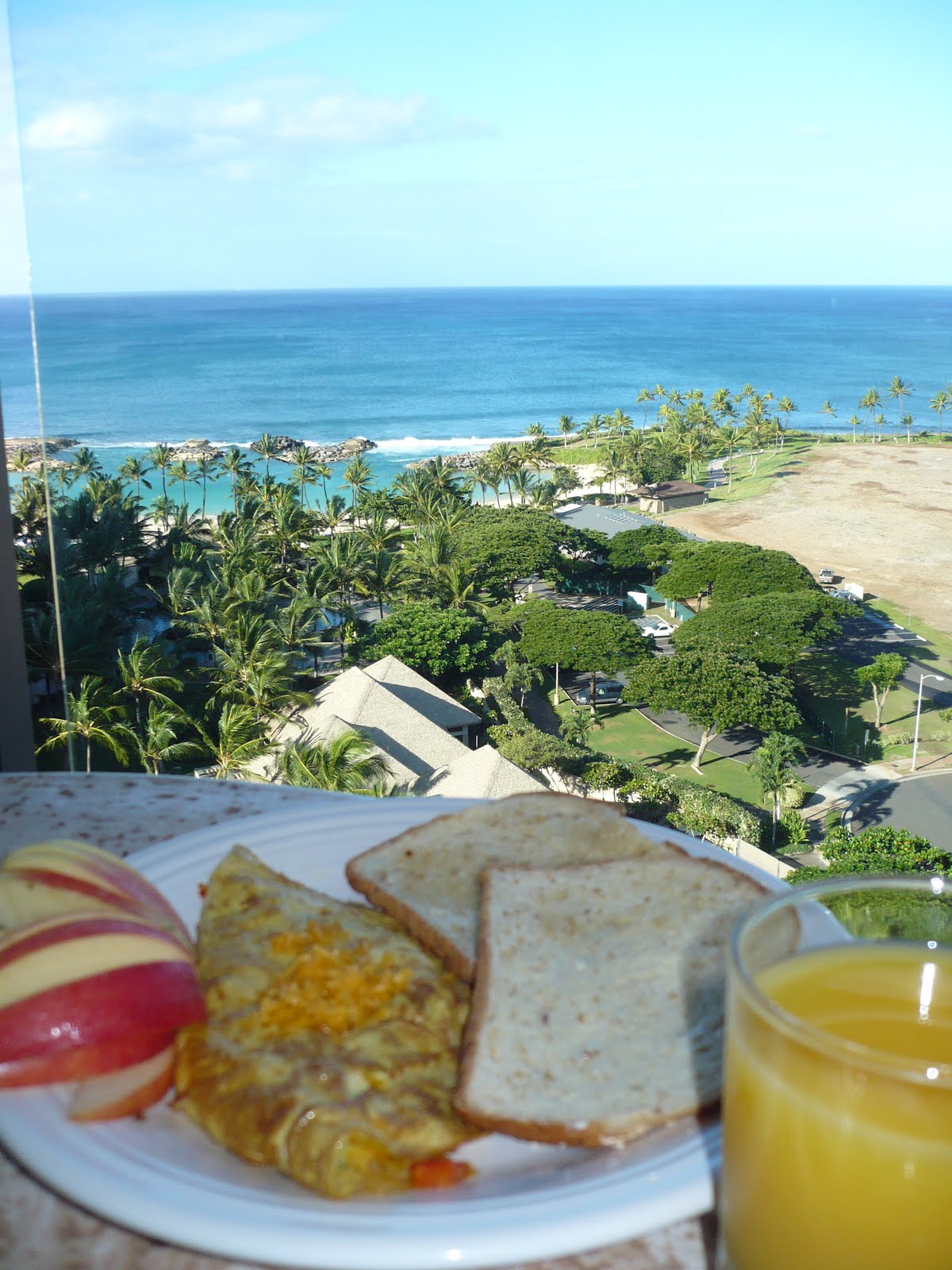
Daily breakfasts on the balcony
Tuesday’s Dinner
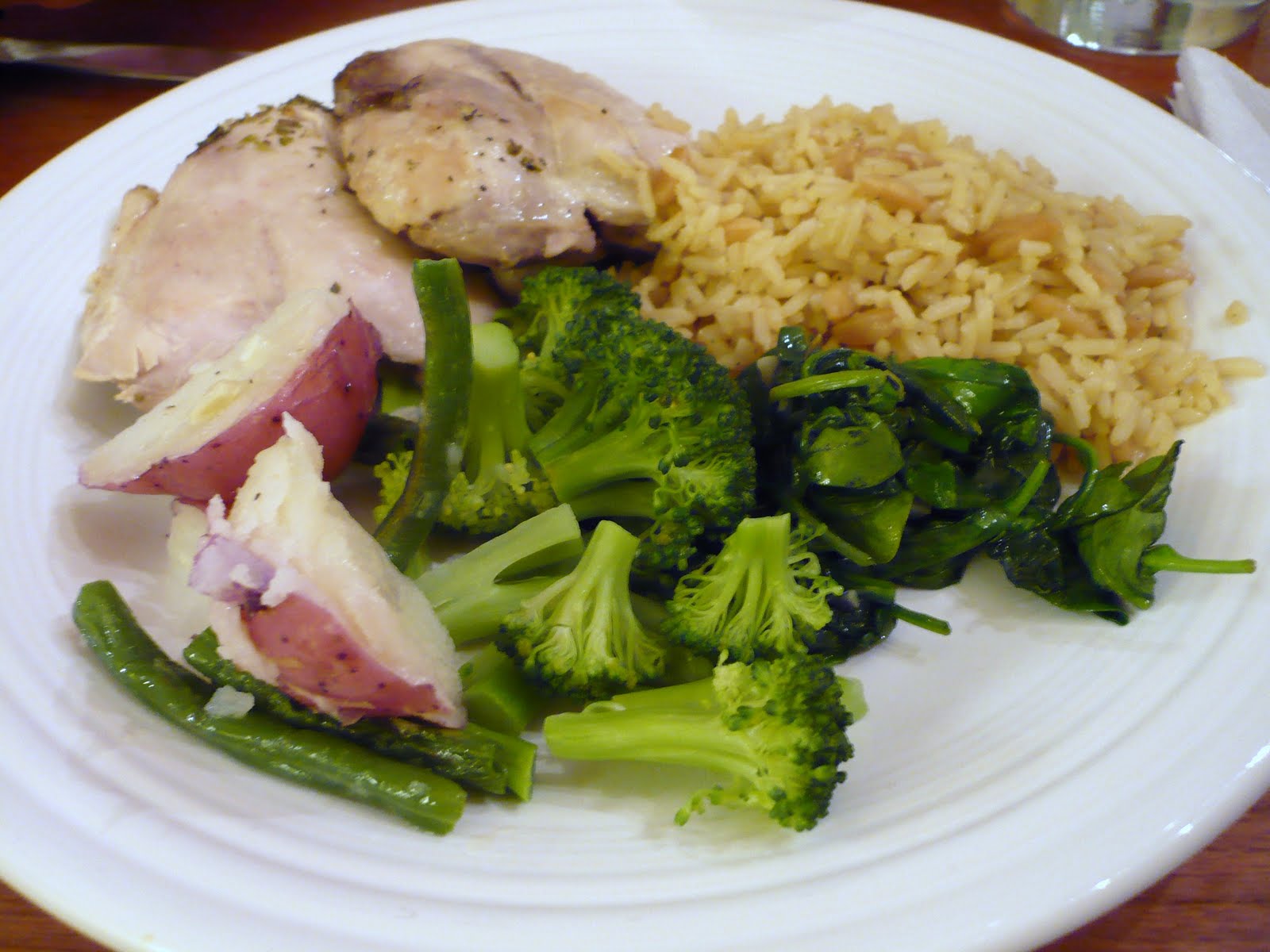
I cooked lemon chicken to go with rice pilaf, steamed broccoli, and used the remaining potatoes and green beans. Groceries are remarkably expensive. Even on sale, we paid $1.99 a pound for chicken! Three half breasts and seven thigh pieces yielded six dinner servings and a chicken sandwich lunch.
More on the expenses of eating out in Hawaii next!
November 24, 2009
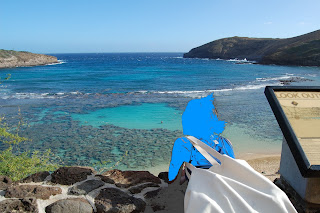
Hamauna Bay (Ha-na-oo-mah in Hawaiian)
I’m home! Or am I?
All good things must come to an end. I’m back from this month’s travels and amazing though it was, I’m glad to be home. My body’s been frantically waving the white flag for a few days now. It’s had trouble coping with the demands of travel and living with a large mixed group so I had to make allowances like checking baggage which costs extra money. With United, you can check your bags online and pay a reduced fee, but make sure that your credit card is accepted! My friend’s wasn’t, and she ended up being recharged at the counter for a total of $70 instead of the $55 we were quoted online.
Meanwhile, my brain is still in Hanauma Bay. For $7.50 per person, and another $9 if your face is too freakishly small to use borrowed gear and must rent a kit, you can go snorkeling! Turns out, if you sink like a stone without snorkel gear, you will also sink like a stone with snorkel gear. But if you have a swims-like-fish friend who’ll tow you along, and can get over sounding like Darth Vader underwater which totally freaked me out (*shiver*), then it’s not so bad.
Meanwhile, back “home,” the brother left an envelope with $200 in cash, I wasn’t attacked with updates of bad news upon walking in the door, and I settled in rather peacefully. Even managed to vacuum an entire room without more than two interruptions. Seriously, where am I?
November 20, 2009
On my string of errands, I ran across a fantastic bit of news about my local library. The thing that always bothered me about donating old books was that they would inevitably end up on the sale shelf where it would bring in a hefty revenue of ten, fifteen or twenty-five cents. Two dollars if it was a paperback. It’s still income, but it felt like kind of a meager thing.
Now, not only can you still support them in the traditional ways, they’ve added the option of donating new books to the library via an Amazon Wish List! That’s pretty awesome.
Books purchased from the wish list are mailed directly to the Library, and a book plate stating that it was a donation is placed inside. At the point of sale, you’ve got the option of selecting a personalized book plate to dedicate your gift, or asking to be the first borrower of that book. Once the book is processed, you’ll be notified that the book is on hold for you. In this electronic age, I love that we’re able to use technology to help the lending library. And remember: your purchase is a tax deductible donation.
Other ways our library appreciates help
- Volunteering: to help around the library; for the Adult Literacy Tutoring Program; with the Book Cellar program
- The usual old book donation method. Anything they can’t shelve for lending purposes goes into the Friends of the Library Book Cellar Sale
- Buy books from the Book Cellar Sale
- Become a member of the Friends of the Public Library organization: you pay dues, and volunteer time raising money for the library
- Donating to the Endowment Fund by purchasing equipment, furniture, etc. that are already existing in the library, and making the item a gift in perpetuity.
- Purchase a book plate that will be affixed to a new hard cover book at the library with any name you like.
I love my hometown library. I spent days holed up in there during elementary school summers, and lugged a metric ton of books to and fro over the years. I’d like to be able to give back in a substantial and long-lasting way, and donating new books that other people can enjoy is right up my alley.
If you’ve benefited from the library’s lending, please consider supporting them in some small way within your means. Public libraries do a lot of good, and they deserve our patronage.
November 17, 2009
I’ve been waking up to this for the past few mornings.
My trip thus far has been an exercise in patience, worry, and discovery. As I mentioned on Twitter, my travel companions were unusually irate with each other just about the entire trip over, so I was stuck in the middle awkwardly trying to make myself as small as possible, or mediating a little bit. Much of the grumpitude was powered by physical discomfort from various ailments of the internal growths sort + temper on one side, and oscillating glucose levels + temper on the other. I love them both, so I did my best, but phew, I was looking forward to the arrival of another couple to defuse the tension.
Unfortunately, things were to get much worse before they got better on that front. Things did finally get better today, but more importantly, the circumstances allowed me to become very intimately acquainted with the new couple’s lives. It’s utterly heartbreaking.
A few years ago, she lost her mother and aunt, horrifically, due to a possible psychotic break of one sibling. Two years later, she lost her father to depression and a series of massive strokes, and to all appearances, has lost another brother to the collective horror of the past few years. They moved from their home with two high-paying jobs to an extremely high cost of living area and both accepted 40% pay cuts to take care of her remaining family. She’s heroically fighting to keep the family intact but, at this rate, it feels like there soon won’t be anyone left functioning.
She tells me that my family story, told in part before she shared hers, made her feel less alone. Now I know that my life doesn’t even begin to compare to the series of ongoing tragedies that compose her reality, but it freed her to share with me some of her many trials in the life of becoming an untimely mother substitute for a younger sibling who can no longer cope with the world he’s living in.
All I can say is, I have to be more grateful.
Not for the fact that her story isn’t my story, because in a surprising number of ways, it is. We share much the same concerns, fears, and trials. But I remember what it was like to sit alone in the mental dark, wishing there was someone I could talk to, wondering if I had the strength to make the right call in the next situation. So I should be grateful that in experiencing the things that I have, in a small way I can help her with her narrative. Having fought through debt, bankruptcies, and plain old messed up deteriorating family relationships, I can share what decisions I made and why. I can teach her what I know about finances, I can just be there to help her through some tough chores that need doing.
These are no more than scraps in the grand scheme of things, but thusly do I find some comfort in paradise today.
November 16, 2009
This year’s updated Comparison of Medical Coverage and 2010 COBRA rates have been published, and the results are not pretty at all.
Hitting the highlights of the changes:
Office Visits
Before: $20 copay
After: $25 copay for primary care; $40 for specialist
Comment: I only see a specialist, so this is a major uptick in cost. 100% increase in cost; $100 v. $200 for 5 visits a year.
Prescriptions
Before: $15/generic and $30/brand name for a 100-day supply
After: $15/generic and $30/brand name for a 30-day supply
Comment: With 2-3 prescriptions going at any given time, we’re looking at 200% increase; $157.5 v. $540
Routine Eye Exams
Before: $20 copay
After: $25 copay
Comment: I’d probably skip this if my meds didn’t carry a risk of eye damage. Not worth skimping on $5. 25% increase; $20 v. $25.
Eyeglasses/Contact Lenses
Before: $125 allowance every 24 months for eyewear purchased from HMO
After: $125 allowance every 24 months for eyewear purchased from HMO NONE. No coverage at all.
Comment: It’s a darn good thing I’ve already replaced my reading glasses and only rarely need them.
HMO Monthly Premiums
Before: 324.82
After: 352.98
Comment: 9% increase on top of doubling and tripling my copays, and nearly killing off the vision care benefit. When ARRA expires and I’m paying the full price, we’ll be looking at an additional $28.16/month.
Dental Monthly Premiums
Before: 49.18
After: 51.90
Comment: 5% increase with no stated changes in coverage. To be fair, I have not been particularly on the ball about researching this area. The summary of benefits provided on the website is here:
The maximum annual benefit paid under the Dental Plan is $1,500 per each covered person. There is no deductible for services at the Employer School of Dentistry and a $50 per person deductible ($150 for families of three or more) for services at any other Dental provider. When you use a Plan dentist (about 93% of dentists in California), the plan pays eligible, reasonable and customary dental expenses as follows:
- 100% (no deductible required) for diagnostic and preventive services, such as exams, cleanings (up to two times in a calendar year), fluoride treatment, and space maintainers.
- 80% for basic services, such as oral surgery, fillings, endodontics, periodontics, and sealants.
- 60% for major services, such as crowns, jackets, fixed bridges, and dentures.
- 50% for implants up to a lifetime maximum of $1,500.
If you use a non-Plan dentist who charges more than Plan’s allowance for service, you must pay the additional cost. Under the Plan, you also may use the services of the Employer School of Dentistry (including the faculty practice). At the Dentistry school, you get 100% coverage of most expenses and a 50% orthodontia benefit ($1,500 lifetime limit).
So if I were willing to travel 50 miles into the city and use the Employer’s students, I could save quite a bit. $50 right off, and then up to $200-300 if I have to have real work done beyond the basic cleaning.
Summary
My ARRA [temporary discount on COBRA rates] expires in March 2010, and if I’m still with this HMO, I should expect to spend no less than $3500 in premiums alone, and another $800 in routine check-ups and prescriptions through 2010. Going without medical coverage is pretty much not an option for me so I’ll either have to continue with this coverage in the absence of an employer-sponsored plan or research individual health plans. *shudder*
November 15, 2009
I know it’s kind of a terrible picture, but the lights twinkling in the dark, the palms blowing in the wind, and the waves of the lagoon are just so pretty.